There is something curious about Nigerians’ relationship with the police. We complain about them, criticise them, film them and sometimes mock them. Yet when armed robbers strike, kidnappers invade communities or violence breaks out at night, the same institution many Nigerians love to criticise becomes the one they expect to respond.
When a child goes missing or an armed criminal is on the loose, the police are called upon to protect citizens.
But what do we owe those we ask to protect us?
Nigeria has recorded repeated losses of police officers this year while they were carrying out their duties. According to publicly reported incidents cited by the writer, at least 21 police officers were killed in eight separate operational incidents since March.
Two officers were killed at a border checkpoint in Kebbi in March, while four others died while repelling a terrorist attack in Borno in April.
In June, three Explosive Ordnance Disposal officers were killed by an improvised explosive device in Zamfara. Two officers were also killed at a checkpoint in Rivers, while another two died following a patrol crash in Imo. Two more officers were killed in Zamfara in July.
Also Read: 16-Year-Old Domestic Worker Rescued From Alleged Bathroom Confinement
More recently, six officers were killed in separate incidents in Benue within days.
Four Mobile Police officers were killed while defending Ayilamo on September 10, while two newly deployed officers were killed four days later in an ambush while escorting the Divisional Police Officer back to the community.
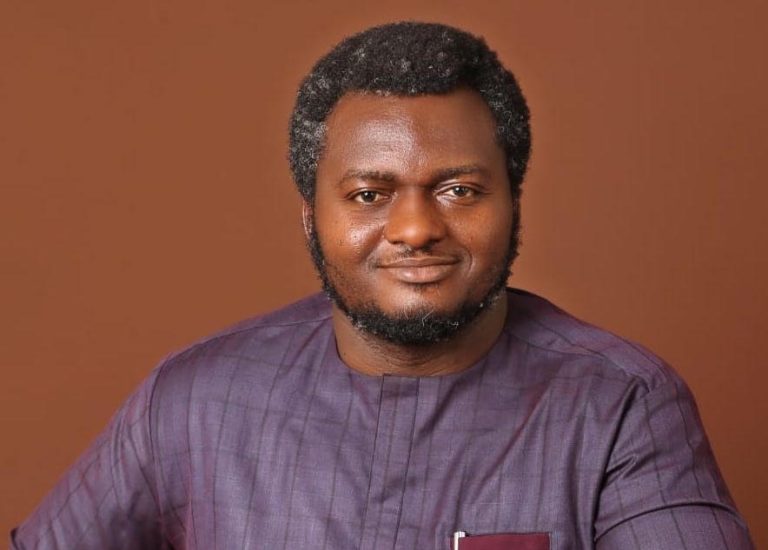
“These are not numbers on a spreadsheet. They had names. They had parents. They had wives. They had children who will now grow up with stories about fathers who left home to work and did not return,” Olagunju wrote.
He cited the deaths of three EOD officers in Zamfara in June as an example, identifying them as Superintendent Abdulrazak Musa Hassan, Inspector Murtala Musa and Inspector Auwal Ahmad.
The officers were part of a team responding to a suspected explosive device planted along the Anka-Bagega road. The device exploded before it could be neutralised, killing the officers.
Olagunju noted that the work of EOD personnel was one of the dangerous responsibilities that required officers to deliberately approach and inspect explosive devices to make them safe.
He expressed concern that repeated reports of police deaths may have become so common that they barely attract public attention.
Olagunju, however, stressed that appreciating police officers should not mean shielding them from accountability.
“Where officers abuse their powers, citizens must be able to speak up, document wrongdoing and seek justice,” he wrote.
He also addressed the ongoing debate over citizens filming police officers.
Inspector-General of Police, Olatunji Disu, recently said Nigerians should not turn police officers into social-media skits, describing indiscriminate filming as demoralising. At the same time, he acknowledged citizens’ right to record officers performing their duties in public.
President of the Nigerian Bar Association, Oyinkansola Badejo-Okusanya, also supported citizens’ right to record police officers while calling for clearer boundaries around privacy and accountability.
According to Olagunju, the issue should be approached by distinguishing accountability from humiliation.
“A citizen should be able to document misconduct. But should a policeman who is risking his life in a dangerous operation also become entertainment because someone happened to have a smartphone?” he asked.
He further argued that Nigerians could contribute directly to improving police welfare.
He cited a recent Lagos initiative under which 2,000 Cowry Cards were provided to police officers, allowing them three months of free access to BRT, rail and electric boat services, followed by a proposed 50 per cent fare discount.
Olagunju said such support should complement, rather than replace, broader reforms in policing, adding that better welfare could contribute to improved performance.
He also called on the private sector to support serving officers and families of those who die in service.
He cited Air Peace for providing rebates and special boarding arrangements for police officers, and suggested similar initiatives across pharmacies, supermarkets, transport companies, bookshops and educational institutions.
He also proposed scholarship schemes for children of officers who die in service.
The Police Officers’ Wives Association (POWA), under its president, Olufunmilola Disu, was cited as an example of such support.
According to Olagunju, POWA, through a partnership with the Niger Delta Development Commission (NDDC), secured a $200,000 master’s scholarship programme for five children of police officers to study in the United Kingdom. The association has also supported scholarships, nursing education, medical outreaches and other welfare programmes for police families.
“These gestures matter because a policeman does not leave his family behind when he puts on his uniform. He carries them with him. And when he dies, they remain,” he wrote.
Olagunju called for a more balanced public conversation about policing—one that demands professionalism and accountability while recognising the risks officers face in the line of duty.
“Thank an officer. Support an officer. Demand professionalism from an officer. Report an officer who abuses power. Protect the right of citizens to demand accountability. But also remember that the person standing at that checkpoint is human,” he wrote.
He noted that the expression, “Thank you for your service,” is commonly used in the United States for members of the armed forces and security services, adding that Nigeria could embrace the underlying principle without necessarily copying another country’s culture.
“Before we ask the police to sacrifice everything for the country, perhaps we should ask ourselves a simpler question: What are we doing to make it worth their while to keep standing between us and danger?” Olagunju asked.
He concluded that efforts to achieve better policing should involve not only demanding improved conduct from officers but also examining what society can do to enable them perform their duties effectively.