Stakeholders in oil and gas sector have called for reforms to the country’s investment treaties and greater public participation in treaty-making processes to safeguard energy transition efforts and preserve the government’s regulatory authority.
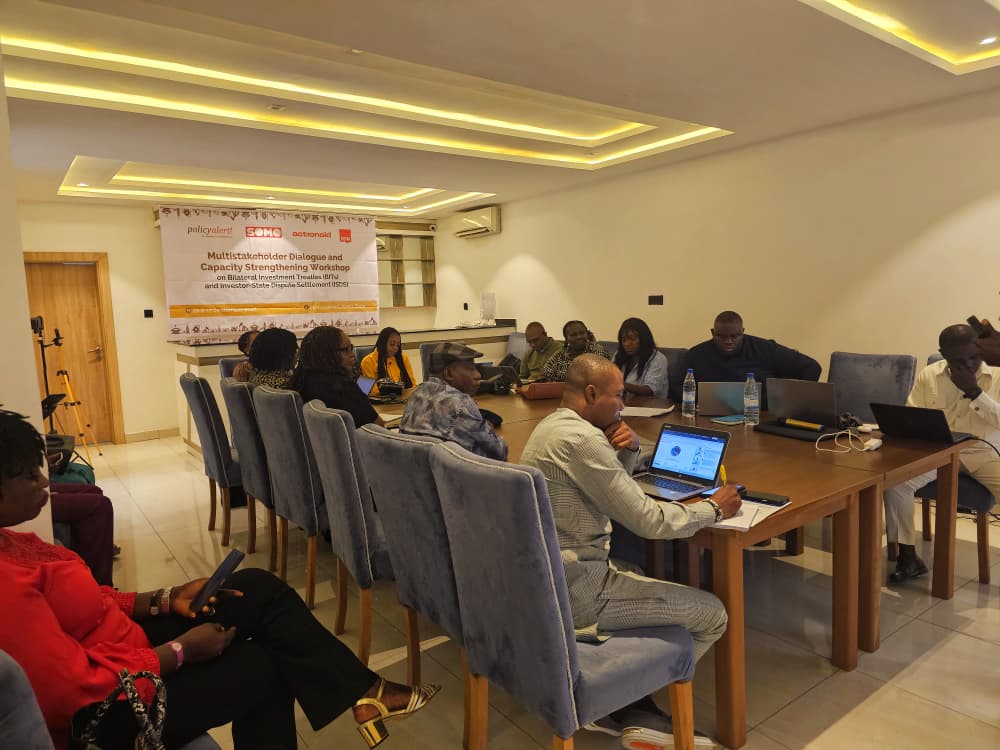
The call was made at a two-day Multi-Stakeholder Roundtable on Investor-State Dispute Settlement (ISDS), Energy Transition and Investment Governance in Nigeria, organised by Policy Alert in partnership with ActionAid Nigeria and Stakeholder Democracy Network (SDN), with support from the Center for Research on Multinational Corporations (SOMO), in Port Harcourt.
The dialogue brought together policymakers, regulators, civil society organisations, host community representatives and journalists to examine Nigeria’s investment treaty framework within the context of developments in the energy sector.
The participants also called for stronger legislative oversight and public participation in the negotiation and review of investment treaties, describing the measures as necessary to protect Nigeria’s regulatory autonomy from potential ISDS claims and support the country’s energy transition.
Speaking at the event, Executive Director of Policy Alert, Tijah Bolton-Akpan, said Nigeria’s energy transition would depend not only on policy commitments and technology deployment but also on whether its investment treaty obligations enabled or constrained the government’s ability to regulate in the public interest.
“As Nigeria navigates the tension between continued reliance on fossil fuel revenues and its energy transition commitments, it is timely to examine ISDS not simply as a legal issue, but as one with significant implications for energy governance, public finances and climate justice,” he said.

Bolton-Akpan said Nigeria had been engaged in investment treaty reform for several years, including the review of older-generation Bilateral Investment Treaties (BITs) and the development of a new approach to balancing investor protection with the government’s right to regulate in the public interest.
He said the ongoing reform provided an opportunity to strengthen transparency and ensure that investment agreements received adequate legislative and public scrutiny, particularly because of their long-term implications for environmental regulation, energy transition and Nigeria’s development priorities.
He called for a more meaningful role for the National Assembly in the consideration and ratification of investment treaties and agreements, saying legislative scrutiny should form part of the ongoing reform process.
The stakeholders also urged the Nigerian Upstream Petroleum Regulatory Commission (NUPRC) to strengthen mechanisms for ensuring that companies divesting from oil and gas assets remain accountable for legacy environmental liabilities.
The roundtable recommended that the Federal Government strengthen legislative and public participation in investment treaty-making and reform, while continuing to review and, where necessary, renegotiate or replace older-generation BITs.
They also called for future investment agreements to clearly protect the government’s right to regulate in the public interest and for the potential ISDS implications of major energy and investment policies, including expanded gas infrastructure, to be assessed.
Participants further urged authorities to strengthen accountability for environmental liabilities arising from oil and gas divestments.
The dialogue highlighted concerns surrounding developments in Nigeria’s oil and gas sector, including asset divestments, new offshore investments and the expansion of gas infrastructure under the Decade of Gas Initiative 2021–2030.
Participants called for greater attention to the potential investment and ISDS implications of these developments, as well as environmental liabilities that could remain after companies exit oil and gas assets.
The roundtable also equipped participants with tools to understand investment treaties and ISDS, investigate their implications, particularly in the fossil fuel industry, and monitor Nigeria’s investment governance reform process.