
Rivers State has a ₦1.84 trillion budget for 2026. But beyond the big number, what does that actually mean for someone living or running a business in Rivers?
The answer will depend largely on how much of the budget is eventually spent on the projects and programmes it was designed to fund.
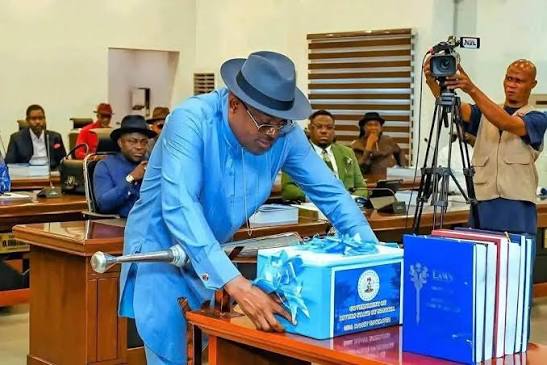
Governor Siminalayi Fubara signed the budget into law on September 3, with ₦1.405 trillion set aside for capital expenditure and ₦413.1 billion for recurrent spending.
In simple terms, most of the state’s spending plan is going towards projects rather than the day-to-day running of government.
And infrastructure takes the biggest share.
Where the money is going
The state has allocated ₦533.32 billion to Works and Infrastructure, making it the largest capital allocation in the budget.
Education is next, with ₦315 billion, while ₦105.43 billion is earmarked for healthcare.
There are also allocations for areas including agriculture, power, youth development, sports and environmental development.
That distribution matters because government spending does not stay inside government offices. When projects actually begin, money can move through contractors, suppliers, transporters, artisans and other businesses involved in delivering them.
So, where could the jobs come from?
The most obvious place is construction.
Roads and bridges require engineers, equipment operators, drivers, labourers, technicians and other workers. Contractors also need materials and services from other businesses.
That means a rise in government-funded construction could create opportunities for businesses supplying cement, steel, equipment, transport and other materials, while also creating temporary or longer-term work for people directly involved in the projects.
The budget also contains ₦15.22 billion for new recruitment, according to the budget presentation.
But there is an important distinction here.
A ₦1.84 trillion budget does not mean ₦1.84 trillion will immediately enter the pockets of Rivers residents.
The actual impact depends on how quickly projects are awarded, how much work is completed and how much of the spending eventually reaches local contractors, suppliers and workers.
What could happen to roads?
This is probably where many residents will notice the effect most directly.
For businesses, a bad road is not just an inconvenience. It can mean longer delivery times, higher fuel consumption, vehicle repairs and difficulty getting goods to customers.
So, if part of the ₦533.32 billion infrastructure allocation results in more roads being completed or rehabilitated, the effect could extend beyond the companies building those roads.
A trader moving goods between communities, a transporter making daily trips or a business receiving supplies from outside Port Harcourt could all potentially benefit from better connections.
The key word, however, is if.
The budget allocation itself does not tell residents which roads will be completed first or how quickly they will be delivered.
It goes beyond roads
The ₦315 billion education allocation and ₦105.43 billion healthcare allocation could also generate economic activity.
Building or renovating schools and healthcare facilities creates demand for contractors, workers, materials and services.
There is also a longer-term effect.
Better schools and healthcare facilities can make communities more productive and improve the conditions in which people work and businesses operate.
The Rivers State House of Assembly also changed part of the original proposal by reducing a ₦6 billion allocation to PAMO University of Medical Sciences and directing the money to the State Primary Healthcare Development Board.
Where will the money come from?
This is another part residents will need to watch.
The state expects to raise ₦487.61 billion from internally generated revenue, while ₦936.05 billion is projected from FAAC-related receipts.
The budget also includes ₦382.48 billion in capital receipts, including loans, grants and asset sales.
That means the government’s ability to meet its revenue projections will matter when it comes to implementing the spending plan.
A budget can allocate money for a road, hospital or school, but the economic effect only becomes real when the money is available and the project moves from paper to construction.
What should Rivers residents watch in 2026?
For residents, the biggest signs will probably be fairly simple.
Are major road projects moving?
Are contractors being paid?
Are schools and healthcare facilities actually being built or renovated?
Are businesses winning contracts and supplying materials?
And, perhaps most importantly, are the projects being completed?
Those questions will tell a clearer story than the ₦1.84 trillion headline alone.
For Rivers businesses, the budget could create opportunities in construction, transportation, supply, equipment, accommodation and other services if implementation gathers pace.
For workers, it could mean new opportunities around government projects and recruitment.
And for ordinary residents, the most visible results could eventually come through roads, schools, healthcare facilities and other public infrastructure.
The 2026 budget has put a large amount of money behind development. The next part of the story is seeing how much of that money actually turns into projects, contracts and jobs across Rivers State.

