Coca-Cola’s $1 billion investment plan in Nigeria is not new. The company announced the five-year commitment in 2024.
What is new is the evidence that the investment is moving further from an announcement into actual expansion, with new production lines already commissioned and Coca-Cola HBC reaffirming the commitment in September 2026.
That raises a bigger question: what does the investment actually mean for Nigeria beyond more Coca-Cola products being made locally?
The answer starts with the factories, but it does not end there.
More production could mean more business around Coca-Cola
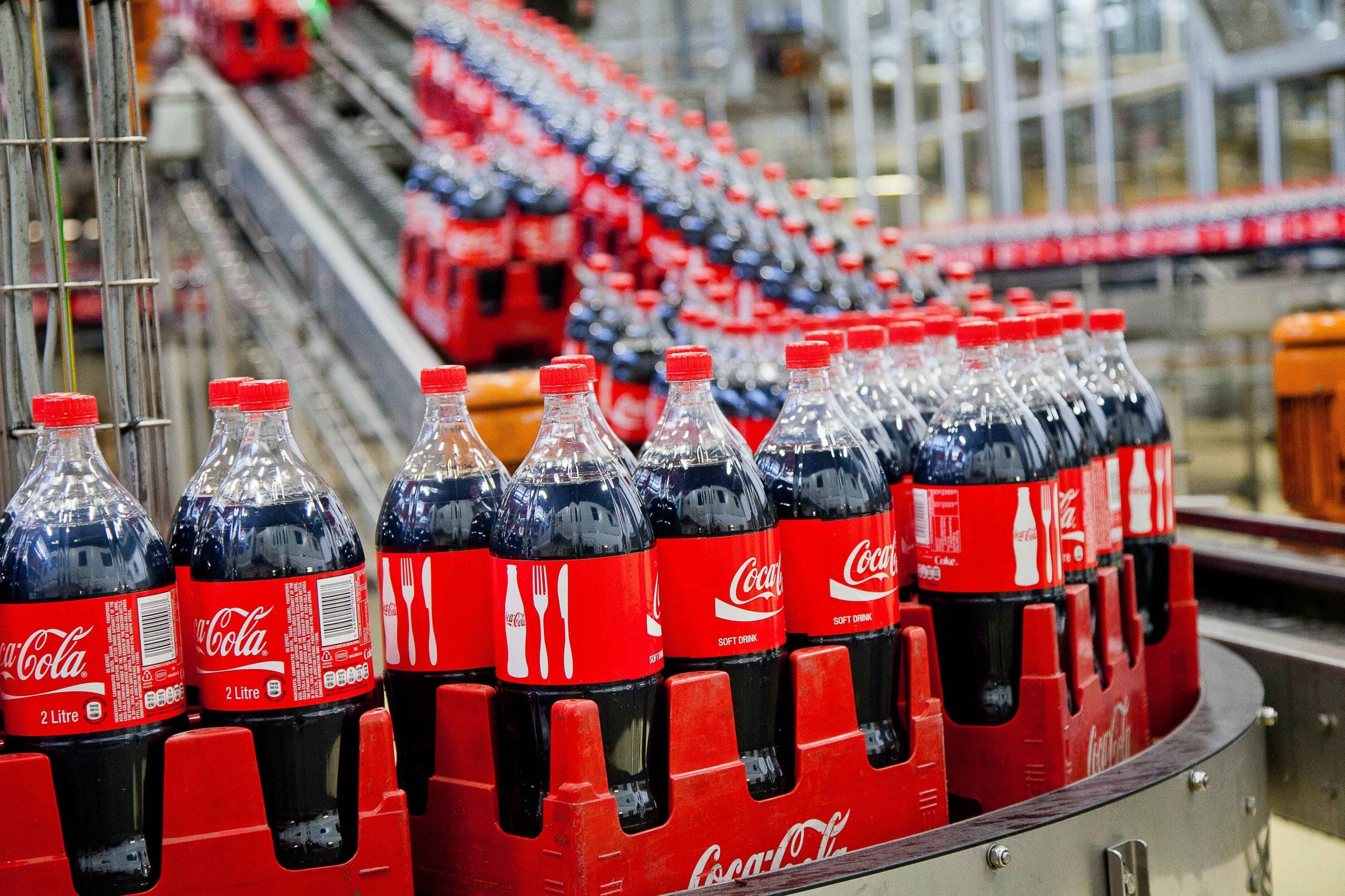
In June, Nigerian Bottling Company (NBC) commissioned three new production lines — two at its Asejire plant in Oyo State and another at Challawa in Kano.
The company described them as the first phase of a wider programme to increase production capacity across its Nigerian plants.
For Coca-Cola, that means more capacity to manufacture its drinks locally.
But a bigger factory operation needs more than machines.
It needs packaging, raw materials, equipment, maintenance, transportation, warehousing and distribution. All of those create business for companies outside Coca-Cola itself.
That is where the $1 billion investment becomes more interesting for the wider economy.
Nigerian companies are already supplying Coca-Cola
A 2024 socio-economic assessment by Steward Redqueen found that the Coca-Cola System bought about $601 million worth of goods and services from Nigerian suppliers during the year.
The study said a significant share of ingredients, packaging materials and other production inputs were sourced and distributed locally.
So Coca-Cola already has a sizeable network of Nigerian businesses around its operations.
If production expands, some of those suppliers could see more demand. The same applies to logistics companies, distributors and retailers involved in getting the products from factories to consumers.
But that is not automatic. The size of the benefit will depend on how much additional spending is directed to Nigerian suppliers and whether those businesses can meet Coca-Cola’s requirements on quality, price and supply.
The jobs go beyond people wearing Coca-Cola uniforms
The employment figures tell a similar story.
The 2024 assessment estimated that the Coca-Cola System supported about 160,200 jobs across its value chain.
Only 2,989 were direct employees. More than 157,200 were estimated to be supported indirectly through areas such as agriculture, logistics, retail, hospitality and distribution.
That does not mean Coca-Cola’s new investment will create another 160,000 jobs.
Instead, it shows how a large manufacturer can support employment outside its own workforce.
When a factory expands, somebody has to supply it, maintain it, move its products and eventually sell them. More production can therefore create additional economic activity around the company.
This is not Coca-Cola’s first major Nigerian investment
NBC says more than $1.5 billion has already been invested in its Nigerian operations over the past decade.
The latest $1 billion programme is therefore another phase of an existing manufacturing operation, rather than Coca-Cola suddenly establishing itself in Nigeria.
That matters because local manufacturing creates a different economic relationship from simply importing finished products.
The more products are made locally, and the more inputs are sourced locally, the more Nigerian workers and businesses can participate in the value chain.
There is a catch
Coca-Cola’s $1 billion commitment comes with a condition.
When the company announced the investment in 2024, it said the plan depended on Nigeria maintaining a predictable and enabling business environment. That message was repeated as the company reaffirmed the investment in 2026.
In practical terms, the company still has to make the numbers work.
For a manufacturer, the cost of electricity, transportation, taxes, regulation, infrastructure and foreign exchange can all affect whether expanding production in a country makes commercial sense.
So the $1 billion should not be viewed as $1 billion already sitting in Nigeria waiting to be spent.
It is a five-year investment programme, with the pace and scale of spending influenced by the conditions in which the company operates.
What could Nigeria get out of it?
The potential impact is bigger than Coca-Cola’s own payroll.
More production could mean more orders for Nigerian suppliers. More orders can support manufacturers and service companies. More products moving around the country can generate more work for logistics and distribution businesses. And continued investment in manufacturing can create demand for technical and industrial skills.
The 2024 figures provide a useful starting point: the Coca-Cola System was estimated to support 160,200 jobs and purchase $601 million in goods and services from Nigerian suppliers, while generating about $1 billion in value-added economic activity.
Those are 2024 baseline figures, not predictions of what the new investment will create.
That distinction matters.
The real story of the $1 billion will be measured over the next five years — by how much new production capacity is added, how much is sourced locally, how many businesses enter or expand within the supply chain and how much economic activity follows the investment.
For now, the factories are already expanding.
The bigger question is how far that expansion spreads beyond Coca-Cola’s gates.