A gas field discovered off the coast of Rivers State in 1973 is finally moving towards production.
On September 23, 2026, TotalEnergies and Nigerian energy company AMNI took the Final Investment Decision (FID) on the Ima gas development, more than five decades after the field was discovered.
The project is expected to cost about $800 million and produce up to 350 million cubic feet of gas per day when it reaches plateau. First gas is targeted for 2028.
That raises an obvious question: if Nigeria knew about this gas since 1973, why did it take until 2026 to develop it?
The answer is not simply that the gas was forgotten.
Nigeria knew the gas was there
The Ima field sits offshore in OML 112 and OML 117, in shallow waters close to Bonny Island.
It was discovered in 1973, but knowing that gas exists underground is only the beginning of an oil and gas project.
Someone still has to decide whether it is commercially viable to spend hundreds of millions of dollars bringing that gas to the surface.
That involves everything from the cost of drilling and building production facilities to the price of the gas, the availability of infrastructure, contracts, financing and whether there is a reliable buyer.
For Ima, that process stretched across several decades.
So what changed?
One important development came in 2024, when AMNI and TotalEnergies signed the Heads of Terms for the project.
The two companies then worked towards the much bigger commitment announced this month: the FID.
The difference matters.
A company can announce interest in a field, study it and negotiate its development for years without actually committing the money required to build it.
FID is the point at which the partners formally commit to moving ahead with development.
In Ima’s case, the decision means the field has now moved beyond being a long-standing gas resource and into the development phase.
Why couldn’t Nigeria develop it earlier?
There is no single event that explains the 53-year wait.
Nigeria’s oil and gas industry has spent years dealing with projects where the resources were known but the economics or investment conditions were not attractive enough to justify development.
That is particularly important for gas.
Producing gas requires more than drilling a well. There needs to be infrastructure to move it, a market willing to buy it and enough certainty for investors to recover what they have spent.
The Nigerian government introduced new fiscal and contracting measures in 2024 aimed at making non-associated gas projects more commercially attractive, including incentives, shorter contracting timelines and lower development costs.
NNPC says those measures helped enable the Ima FID.
That is the government’s explanation for what changed. The wider project history, however, involved years of commercial and technical work between the partners.
Why does Ima make more sense now?
The biggest difference may be what is waiting for the gas.
Ima is not being developed without a clear destination.
The field will be connected by a pipeline to Nigeria LNG’s facilities on Bonny Island. Once production begins, the gas is expected to supply about one-third of the additional feedgas required for NLNG’s Train 7 expansion.
Train 7 is expected to increase NLNG’s liquefaction capacity from 22 million tonnes per year to 30 million tonnes.
So there is now a much clearer link between the gas underground and a major piece of infrastructure that needs more gas.
That makes a difference when companies are deciding whether a project is worth billions of naira or hundreds of millions of dollars.
What exactly is being built?
The development is relatively straightforward compared with some large offshore projects.
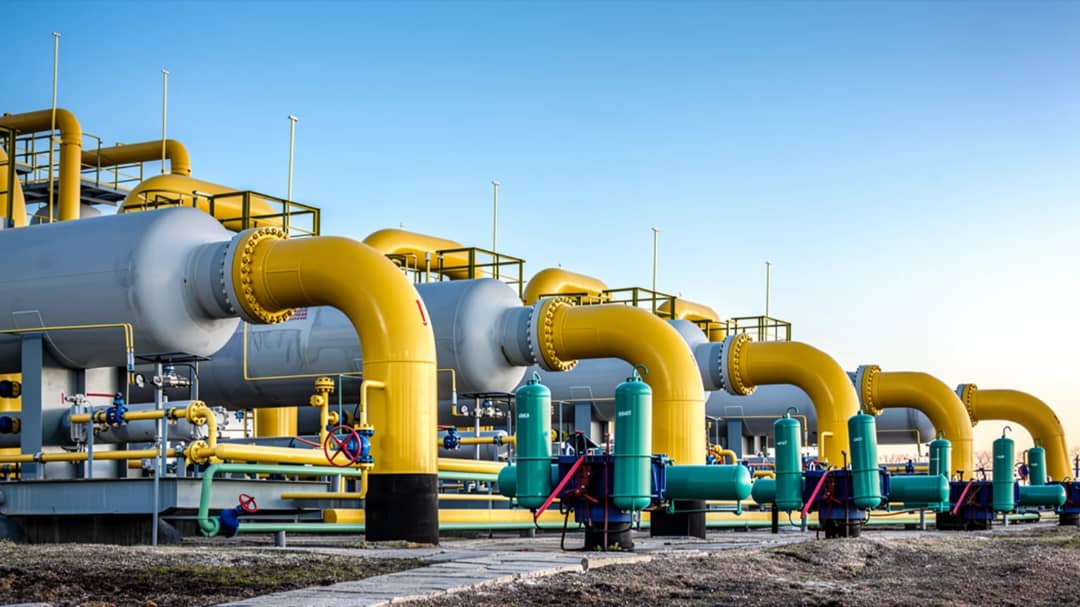
Ima will use a single offshore platform connected to Nigeria LNG by a roughly 22-kilometre pipeline.
TotalEnergies will operate the project with a 40% interest, while AMNI owns 60%.
At peak production, the field is expected to deliver around 350 million cubic feet of gas daily, equivalent to more than 60,000 barrels of oil equivalent per day.
The companies expect first gas in 2028.
So the next two years are about turning the FID into an actual producing facility.
What does the project mean for Rivers?
This is where the Ima project becomes more interesting locally.
The field is offshore Rivers State, close to Bonny Island, and the project is expected to involve Nigerian contractors and workers.
TotalEnergies says all key contractors will be local companies and around 60% of the development workforce is expected to come from host communities.
That does not mean 60% of all the project’s money will automatically stay in Rivers.
But it does create a potential chain of activity around engineering, fabrication, logistics, marine services, construction, catering, security and other support businesses.
For companies in Rivers that can actually win contracts, the project could therefore become more than a story about gas production.
What about Nigeria’s wider economy?
The immediate importance of Ima is its connection to Nigeria LNG.
More gas supplied to NLNG can support the company’s expansion and, ultimately, LNG exports.
That matters because Nigeria is trying to get more value from its gas resources instead of leaving large volumes underground.
The project is also expected to have strong Nigerian participation in financing. Reporting from the FID signing said seven banks are financing the development, with more than 75% of the financing coming from Nigerian banks.
That gives the project another Nigerian connection: local financial institutions are helping finance the development of a Nigerian gas resource.
Does this mean Nigeria has solved its gas problem?
Not quite.
Ima is one project.
Nigeria still has a large gap between the amount of gas it has underground and the amount that actually gets produced, transported and delivered to businesses, power plants and export facilities.
There are also other gas projects that still need to move through the same difficult journey from discovery or appraisal to investment decision and eventually production.
That is why Ima’s 53-year journey is useful beyond the field itself.
It shows the difference between having a natural resource and being able to turn that resource into an operating business.
Why 53 years matters
The striking part of the Ima story is not simply that the field was discovered in 1973.
It is that Nigeria has spent more than half a century knowing the resource existed, while the commercial conditions needed to develop it took much longer to come together.
Now the project has crossed the biggest investment hurdle.
AMNI holds the larger stake. TotalEnergies is the operator. Nigerian banks are involved in financing. A pipeline will connect the field to an existing LNG operation, and the gas has a clear role in the Train 7 expansion.
The field is therefore no longer just a 1973 discovery on a map.
It has a development plan, committed investors and a target for first gas.
The real test now is whether Nigeria can get the project from FID to production by 2028 — and whether other long-delayed gas discoveries can make the same journey without waiting another five decades.