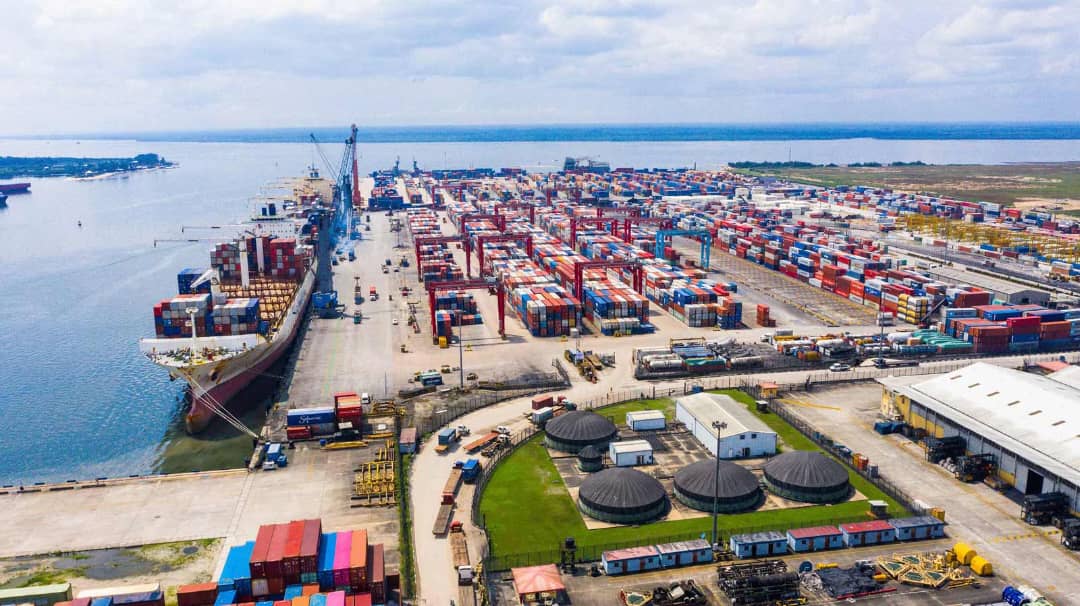
The Federal Government’s decision to upgrade Onne Port could give Rivers State a bigger role in Nigeria’s maritime economy, particularly in oil and gas, logistics and the movement of goods across the South-South and South-East.
The Minister of Marine and Blue Economy, Adegboyega Oyetola, announced on Sunday that the government had approved the comprehensive modernisation of Onne, Rivers, Delta and Calabar ports.
The move expands the Federal Government’s port-modernisation programme beyond Lagos, where Apapa and Tin Can Island ports had already been approved for upgrades. Oyetola said the aim is to reduce the concentration of cargo around Lagos and provide more efficient gateways for international trade.
For Rivers, the significance goes beyond having another upgraded port.
Why Onne matters
Onne is already one of the major maritime and oil-and-gas centres in the state.
The port supports the movement of cargo and equipment used by companies operating in the oil and gas industry, while the surrounding Onne Oil and Gas Free Zone has developed into a major business cluster.
That means improvements at the port could affect a much wider network of businesses.
Shipping companies, freight forwarders, truck operators, warehouses, equipment suppliers and other logistics businesses all depend on the smooth movement of cargo through the area.
If the upgrade delivers better infrastructure and faster operations, those businesses could see changes in how quickly goods and equipment move through Onne.
What the government says will change
According to Oyetola, the upgraded ports are expected to improve cargo handling, reduce the amount of time vessels spend in port and strengthen connections between different parts of the country.
The government also says the changes should make the movement of goods more predictable and cost-effective.
For businesses, that matters because delays at ports can add to logistics costs.
A shipment that spends longer waiting for clearance, handling or transportation can eventually cost more to move from the port to its final destination.
The government’s plan is therefore not only about expanding physical infrastructure. It is also about making the entire movement of goods more efficient.
The Rivers oil and gas connection
Onne’s location gives the upgrade particular relevance to Rivers’ oil and gas industry.
The area already serves companies involved in offshore and onshore petroleum activities. Large equipment, materials and other supplies can move through the port before being transported to oil and gas operations.
Improving the port could therefore strengthen an ecosystem that already exists rather than creating an entirely new one.
More efficient port operations could also make Onne more attractive to companies looking for logistics bases in the Niger Delta.
That could create additional demand for local services, although the actual scale of any new investment will depend on what is eventually delivered under the upgrade programme.
It could affect businesses outside Onne too
The impact may not stop at the port.
A busier and more efficient Onne could increase activity for transport companies, warehouses, freight agents, equipment-maintenance businesses and other companies involved in moving goods.
For Rivers businesses, this could create opportunities to provide services to companies operating around the port and the wider industrial area.
But there is an important condition.
The port cannot operate efficiently if the infrastructure connecting it to businesses is inefficient.
The Federal Government itself has said its long-term vision is an integrated system in which ports work alongside roads, railways and inland waterways to move cargo.
That means the roads leading to and from Onne and the wider transport network will remain important to whether businesses actually feel the benefit of the upgrade.
What we don’t know yet
The announcement is significant, but it is still an approval rather than evidence that the physical upgrade has already been completed or fully funded.
The government has not disclosed the total value of the programme covering Onne, Rivers, Delta and Calabar ports, nor has it announced a detailed implementation timetable in the latest announcement.
So businesses in Rivers will have to wait for more details on the scope of the work, financing and when construction or other improvements will begin.
What it could mean for Rivers
If the planned improvements are implemented effectively, Onne could handle more cargo and become a more efficient gateway for businesses in Rivers and neighbouring states.
That could strengthen the state’s existing oil-and-gas and logistics industries and potentially create more demand for businesses supporting port operations.
It could also reduce the need for some businesses in the eastern and southern parts of Nigeria to depend on Lagos for maritime trade.
For now, however, the next stage is crucial.
The Federal Government has approved the upgrade. The bigger test will be how quickly that approval turns into better port infrastructure, faster cargo movement and lower logistics pressures for businesses operating in and around Rivers.