Emergency responders should be allowed to disregard certain traffic regulations when necessary to save lives, provided they exercise caution and prioritise public safety, a commentary by Lanre Olagunju has argued.
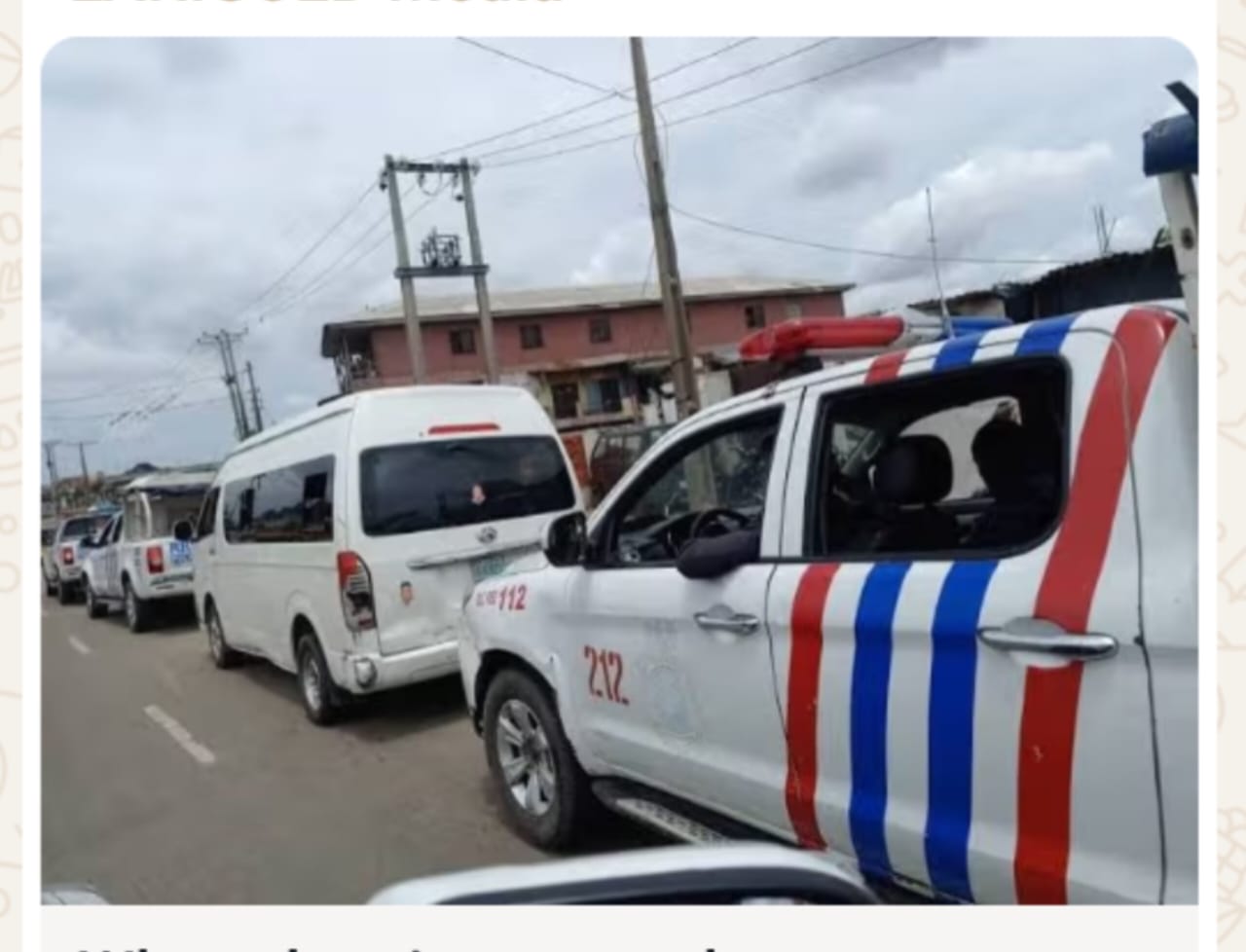
Olagunju made the argument while reacting to a viral video showing officers of the Rapid Response Squad (RRS) of the Lagos State Police Command driving against the flow of traffic.
The footage attracted criticism from members of the public, with some questioning why police officers responsible for enforcing traffic regulations would appear to violate them.
However, the Lagos State Police Command explained that the officers, operating a patrol vehicle marked RRS Attack 07, were responding to distress calls from motorists trapped in a traffic obstruction.
According to the command, the team was dispatched by the Control Room as the closest available formation and had to navigate through the opposite lane to reach the scene and prevent the obstruction from spreading to adjoining roads.
In his commentary titled, “When the Siren Sounds, Common Sense Must Travel Faster Than Traffic,” Olagunju cited Regulation 158 of the National Road Traffic Regulations 2012, which allows law enforcement officers responding to emergencies or performing civil protection duties to disregard prescribed traffic signs, provided they exercise due regard for the safety of other road users.
He argued that emergency privileges should not be mistaken for reckless driving, noting that they recognise the need for exceptions to ordinary traffic regulations when lives are at risk.
Olagunju, however, expressed concern over the confrontation that reportedly followed the incident, alleging that an individual identified as an activist and social media content creator positioned himself in front of the police vehicle, obstructing its movement while recording the encounter.
While acknowledging citizens’ right to question public officials, he maintained that public scrutiny should not degenerate into deliberate obstruction of officers performing legitimate duties.
He questioned the motive behind blocking the police vehicle, warning that the confrontation could have escalated into a more dangerous situation.
The writer commended the RRS officers for maintaining their composure, describing restraint as an important aspect of professional policing.
He also called for Nigeria to adopt a clearer emergency road-access policy similar to those in the United Kingdom and parts of the United States, where authorised emergency vehicles are permitted to use restricted lanes and disregard certain traffic regulations when responding to emergencies, subject to safety requirements.
Olagunju urged the government to grant police vehicles, ambulances and fire engines authorised access to Bus Rapid Transit (BRT) corridors, one-way routes and other restricted roads whenever operationally necessary.
He further criticised what he described as a growing practice of provoking police officers and turning them into unwilling performers in social media skits.
Referencing previous warnings by the Inspector-General of Police, Olatunji Rilwan Disu, against using police personnel as props for skits and viral content, Olagunju argued that deliberately provoking officers and presenting their reactions as entertainment does not amount to responsible activism or meaningful public accountability.
He stressed that while officers who abuse their powers must be held accountable, freedom of expression should not be used as a justification for obstructing legitimate police operations.
The writer warned that repeatedly ridiculing and undermining police officers could erode their morale and weaken public confidence in an institution saddled with the responsibility of tackling insurgency, terrorism, banditry, kidnapping and other violent crimes.
He also noted that the Lagos State Police Command’s clarification was necessary but should be complemented by sustained public education on emergency road access and citizens’ responsibilities when emergency responders are on duty.
Olagunju maintained that the rule of law was not weakened when authorised emergency responders made necessary exceptions to traffic regulations, but rather when rules were applied without regard for the lives they were designed to protect.
He concluded that roads should never become barriers between people in distress and those deployed to rescue them, stressing that saving lives sometimes requires understanding the purpose behind regulations rather than enforcing them without consideration for emergencies.