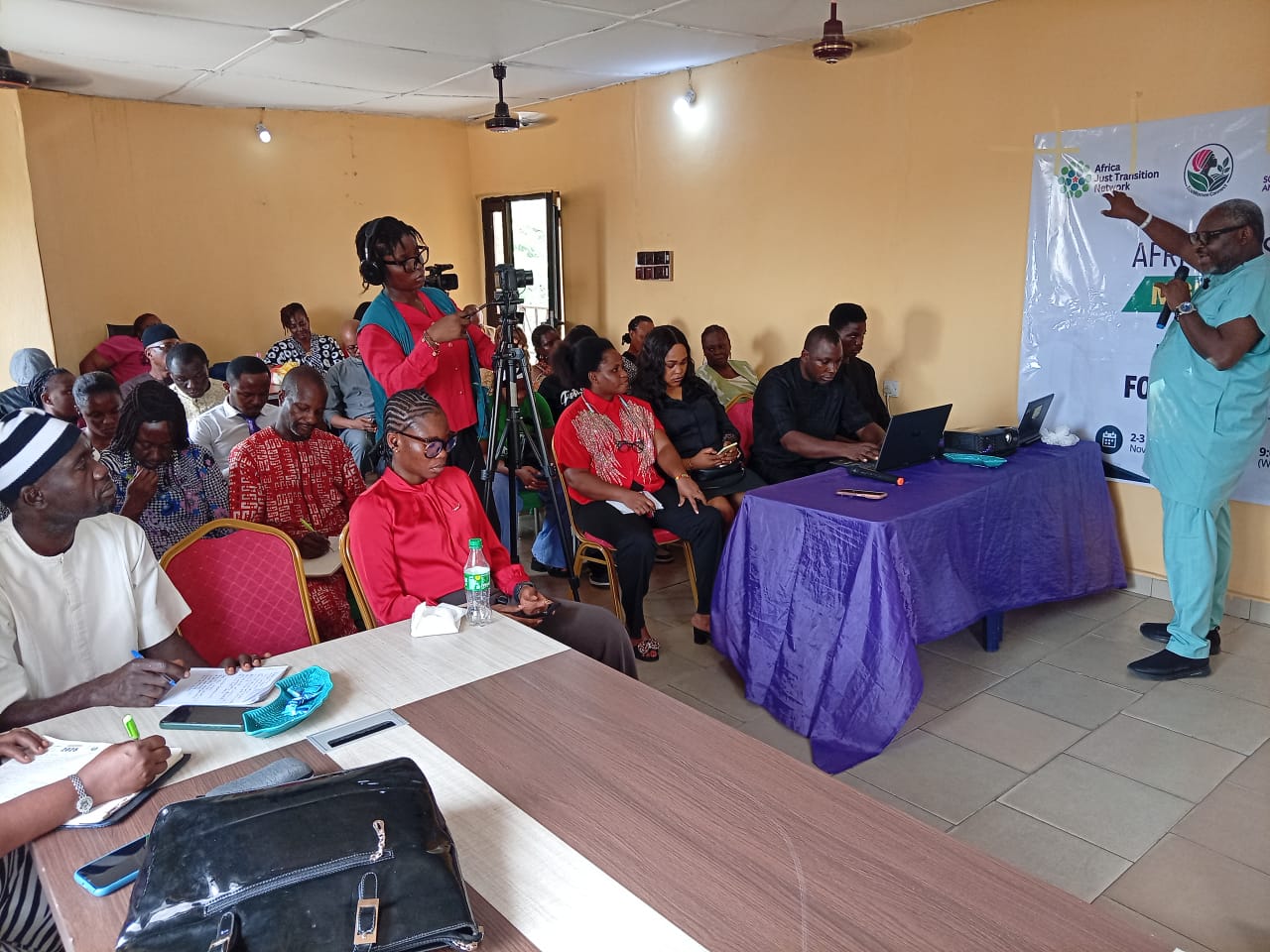
Just Energy Transition advocates have called on the Rivers State Government, local government councils and other state governments across Nigeria to formulate and implement policies that will promote access to affordable and clean energy in communities.
The advocates said state governments must take greater responsibility for addressing energy poverty and ensuring that communities are not left behind in Nigeria’s transition from fossil fuels to renewable energy.
The call was made on Monday, November 2, 2026, during the 2026 meeting of the Africa Just Transition Network (AJTN), Nigeria Chapter, held in Port Harcourt, with the theme, “Building Collective Power for a Just Transition in Nigeria.”
Speaking on the theme, the Executive Director of the Global Initiative for Food Security and Ecosystem Preservation (GIFSEP), Dr Michael Terungwa, said achieving a just energy transition required collective responsibility, increased investment in clean energy and effective implementation of existing policies.
Terungwa urged state and local governments to take advantage of the Electricity Act, which empowers states to generate, transmit and distribute electricity, by developing policies that guarantee energy access for their residents.
He said the transition should not be treated as a federal government responsibility alone, stressing that its impact and implementation must be felt at the community level.
According to him, investments should prioritise renewable energy and clean cooking solutions to reduce household air pollution, protect women from the health risks associated with firewood and charcoal, and preserve forests.
He warned that continued heavy investment in fossil fuels could leave Nigeria with stranded assets as countries across the world increasingly shift towards cleaner energy sources.
The GIFSEP executive director also expressed concern over the environmental consequences of oil companies divesting their interests in some communities without adequately addressing existing pollution.

He noted that communities in the Niger Delta and coal-mining areas of North-Central Nigeria continued to suffer environmental degradation and its associated health consequences.
Terungwa further called on Nigerians to hold political office seekers accountable for their positions on climate change, energy poverty and food insecurity ahead of the 2027 general elections.
He said political campaigns should address practical policies for building climate resilience, improving access to clean energy and reducing food insecurity, rather than focusing exclusively on regional, ethnic and religious considerations.
He identified poor implementation of existing policies, including the Climate Change Act and Nigeria’s Nationally Determined Contributions (NDCs), as major challenges to achieving a just transition.
Terungwa also called for increased budgetary allocations to clean energy and climate finance, particularly to make cleaner cooking alternatives affordable and accessible to low-income households.
Earlier, the Coordinator of the Africa Just Transition Network, Friday Nbani, said the network was working to promote an inclusive transition that prioritises environmental protection, human rights, public health and the livelihoods of vulnerable communities.
Nbani disclosed that the network operates in about 28 African countries, with 88 non-governmental organisations, community-based organisations and civil society groups as members.
He said the Nigeria Chapter organised the annual meeting to develop a common position on the country’s energy transition challenges and strengthen collaboration among community groups, activists and civil society organisations.
According to him, the network’s key areas of engagement include human rights, climate finance, renewable energy, campaigns, media and women’s participation.
Nbani identified gas flaring and coal mining as major environmental concerns the network intends to address through advocacy, public engagement and constructive dialogue with government agencies.
He stressed the need for a strategic roadmap that would ensure environmental protection and improve the quality of life of communities affected by extractive activities.
On how the network intends to promote clean energy adoption in Rivers State and other oil-producing communities, Nbani identified public awareness and community sensitisation as critical strategies.
He said communities needed to understand the benefits of renewable energy and the importance of transitioning without undermining their livelihoods or economic wellbeing.
Nbani added that the network would continue to advocate increased investment in renewable energy and climate finance at national and international levels.
Similarly, the Co-Lead of the Africa Just Transition Network, Nigeria, Dr Amamie Stella, emphasised the need to make energy affordable and ensure women’s inclusion in the transition process.
Stella said the transition must be gradual and inclusive, considering the prevailing energy poverty in Nigeria and other African countries.
She maintained that government policies must take community realities into account, stressing that no individual or community should be left behind in the shift towards cleaner energy.